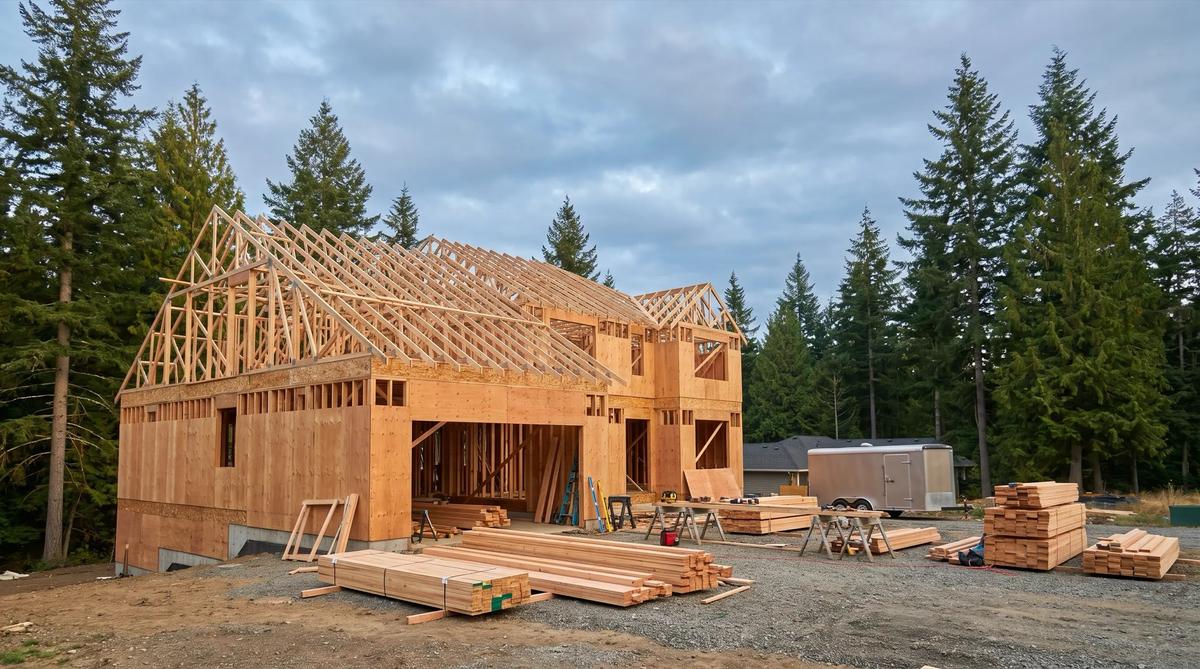
Some jobs are a quick fix. Others quietly need a general contractor. Samuel started Sarber Construction specifically because too many of these projects get handed to whoever is cheapest and fastest, not whoever can actually manage the whole job. Here is how to tell the difference before you hire.
What a general contractor actually does
A general contractor takes responsibility for a whole project: scoping the work, pricing it, scheduling the trades, pulling permits, arranging inspections, and making sure the finished result is what was agreed. You hire one party, and that party is accountable for the outcome. A handyman, in contrast, generally handles individual tasks.
Sign one: more than one trade is involved
The moment a project needs framing plus electrical plus plumbing, you need someone coordinating them. As a general contractor, Samuel manages that coordination personally instead of leaving you to schedule five different people yourself. Each trade depends on the one before, and a missed handoff costs days.
Sign two: the work needs a permit
If the work needs a permit, it needs someone who pulls it, schedules inspections, and closes it out properly. Additions, structural changes, and most work involving new electrical or plumbing fall into this category. Requirements vary by city and county, so check local requirements. Unpermitted work can create trouble later, including when you sell.
Sign three: structure, water, or safety is involved
Anything touching structure, load, or safety is not a handyman job. Removing a wall, reframing a floor, fixing rot in a deck attachment, or chasing a water leak all fall in this category. One point of contact managing the whole scope is cheaper than fixing it twice. See our home repair contractor page for how we handle those jobs.
Sign four: you cannot see what is behind the wall
Remodels and repairs often reveal hidden conditions. A general contractor has the experience to know what to look for and the standing to coordinate a fix. If the plan is "open it up and see," you want someone who can respond, not someone who has to find another trade first.
Sign five: the project is large enough that a written scope matters
When a job is big enough that a misunderstanding would be expensive, you want a written scope, a written price, and a schedule. That is a general contractor's territory. Kitchen and bath remodels, additions, and new construction all benefit from that structure. Our additions and remodels page explains how it works.
When a handyman is enough
A handyman is a fine choice for a single small task: a squeaky door, a loose railing, a patch of drywall. If the job is one task, one trade, no permit, and no structure or safety at stake, you may not need a general contractor. Our maintenance and upkeep service covers ongoing small repairs for people who prefer one reliable person to call.
How to check a Washington contractor
- Ask for the contractor's license number, and verify it with the state. Washington contractors are registered with the Department of Labor and Industries, and its public lookup shows whether a license is current.
- Ask who will be on the job and who you will call when you have a question.
- Ask how permits and inspections are handled.
- Ask for the proposal in writing, with scope, price, and schedule.
Sarber Construction holds Washington contractor license number SARBECL752L4. You are welcome to look it up.
What a good proposal should include
- A clear description of the work, room by room or stage by stage.
- The price, and what is included in it.
- Who is responsible for permits and inspections.
- A schedule with start and finish expectations.
- How changes to the plan are handled, in writing, before the work changes.
What does a general contractor cost?
People search how much a general contractor costs, and it comes down to how they are paid. Some work on a fixed price for a defined scope. Others use a cost-plus arrangement, where you pay actual costs plus a fee or percentage. Both are legitimate, but they carry different risks. Sarber Construction gives a free consultation, followed by a paid written proposal specific to your scope, as described on our pricing page.
General contractor, remodeling contractor, or custom home builder?
The labels overlap. A remodeling contractor focuses on existing houses, a custom home builder focuses on new ones, and a general contractor manages either. If you are not sure which you need, describe the project and we will tell you plainly. Our work spans new construction and remodels, and we work across Mount Vernon and nearby towns.
Next steps
If two or more of these signs sound like your project, call for a free walk-through. Contact Samuel and describe what you are planning, and we will tell you what it needs.
Related guides and services.
Ready to talk about your project?
Describe your project and see if it qualifies for a free in-home consultation. From there, Samuel can prepare a detailed written proposal specific to your scope.